Ephesus

Ephesus: A Journey Through Time

A Brief Overview of Ephesus

Located on the western coast of Anatolia, within the borders of Selçuk district in Izmir province, Ephesus is an ancient city with a history dating back to 6000 BC. Having hosted many civilizations throughout history and serving as a significant trade center, Ephesus is now recognized as one of the best-preserved ancient cities in the world and is a UNESCO World Heritage Site.

History and Significance

Ephesus has been under the influence of various civilizations, including the Lydians, Persians, Greeks, Romans, and Byzantines. The city’s importance was greatly enhanced by its famous Temple of Artemis, one of the Seven Wonders of the Ancient World. Situated on a trade route and possessing a harbor, Ephesus thrived as a major commercial hub. Excavations at Ephesus have unearthed theatres, libraries, agoras, baths, and homes, providing valuable insights into ancient life.

Places to Visit and Activities
Ephesus has a great deal to offer visitors:

Temple of Artemis: The ruins of this once-magnificent temple, one of the Seven Wonders of the Ancient World, offer a glimpse into the architectural and religious practices of the time.
Library of Celsus: The impressive facade of this Roman-era library reflects the city’s intellectual pursuits.
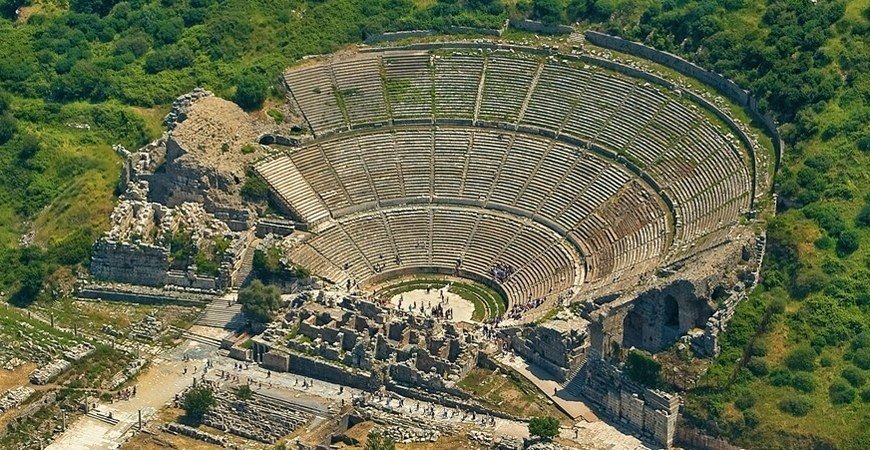
Great Theatre: With a capacity of 25,000 spectators, this ancient theatre continues to host various events today.
Agora: The city’s social and commercial center, the agora provides clues about daily life in ancient times.
House of the Virgin Mary: Believed to be the place where the Virgin Mary spent her last years, this site is a significant pilgrimage destination for Christians.
Ephesus Museum: This museum houses artifacts unearthed from the city, offering a deeper understanding of ancient Ephesus.

Current State
Today, Ephesus is one of Turkey’s premier tourist destinations. Ongoing restoration efforts ensure that the ancient city is preserved for future generations. Millions of visitors from around the world come to explore this remarkable archaeological site each year.

Why Visit Ephesus?

Step Back in Time: Travel back in time and experience the grandeur of an ancient city.
Architectural Marvels: Admire the architecture of structures like the Temple of Artemis and the Library of Celsus.
Cultural Immersion: Learn about the diverse civilizations that shaped Ephesus.
Natural Beauty: Explore the surrounding natural beauty and enjoy the peaceful atmosphere.
Pilgrimage: For Christians, visiting the House of the Virgin Mary is a deeply spiritual experience.

Conclusion
Ephesus reflects the enduring legacy of human civilization. Whether you’re a history enthusiast, an architecture admirer, or simply seeking a unique travel experience, Ephesus offers something for everyone. A visit to this ancient city is sure to leave a lasting impression.

Visiting Ephesus: practical information

The Ephesus ancient city sits in the Selcuk district of Izmir province. From Izmir Adnan Menderes Airport or central Izmir, travelers can ride the IZBAN commuter rail (transferring at Tepekoy) or a TCDD regional train directly to Selcuk station, then take a short taxi or minibus ride to the ruins. The site has two entrances: the Upper Gate (Magnesia Gate) and the Lower Gate. Starting at the Upper Gate and walking downhill toward the Lower Gate is the easiest route on your knees and keeps the main facades in front of you.

Allow 2 to 3 hours for the outdoor ruins, or up to 4 hours if you add the indoor villas and museum exhibits. Spring and autumn offer pleasant temperatures, whereas summer afternoons on the exposed marble streets are hot. Arrive at the 08:00 opening time or after 15:30 to avoid midday cruise ship crowds; box offices typically close around 17:30 and the site clears at 18:00. An entry ticket is required, and the 15-day Museum Pass Turkiye (priced at 165 EUR on the official portal) and Museum Pass The Aegean are accepted. Note that the covered Terrace Houses require a separate admission ticket unless included in your pass tier. Check the official site before you go for current hours and prices. The archaeological park is open daily with ongoing conservation work along select residential blocks.

History and what to see

Inscribed as a UNESCO World Heritage Site in 2015, the Ephesus ancient city preserves a Greco-Roman street grid where civic buildings, bath complexes, and colonnaded avenues follow the contours of Mount Pion and Mount Coressus. Beyond the major landmarks listed in general overviews, look for these specific structures as you walk downhill from the Upper Gate:

  • Odeon and Prytaneion: Bordering the upper The Ephesus Agora, the semi-circular Odeon hosted council meetings and musical performances, while the adjacent Prytaneion housed the sacred hearth fire of the city and yielded the famous marble statues of Artemis.
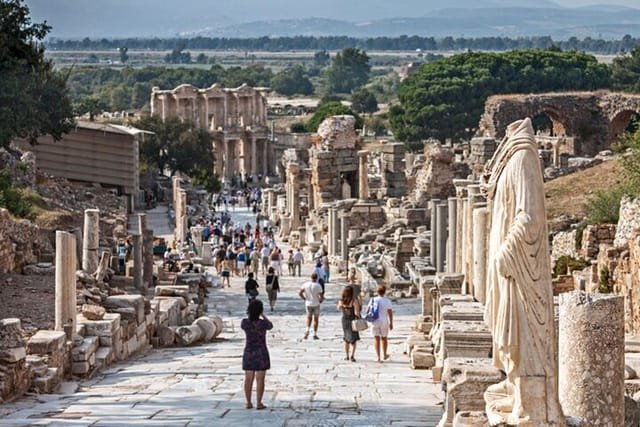
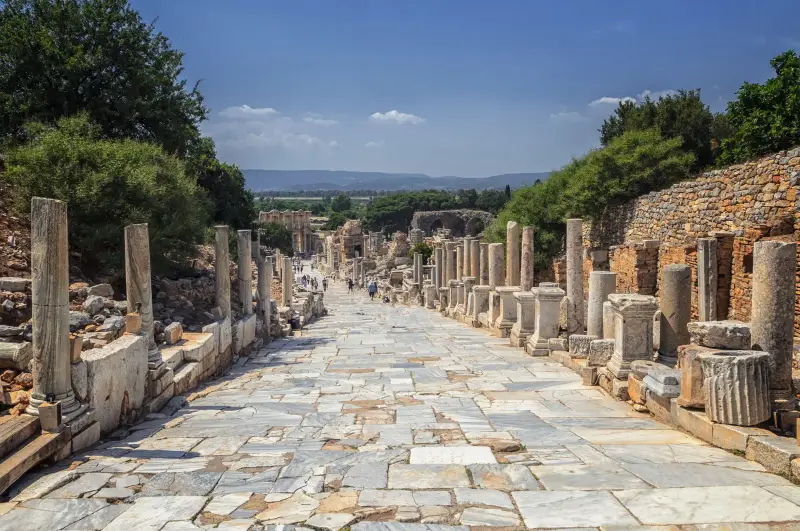
  • Curetes Street and Temple of Hadrian: This sloping marble avenue links the upper and lower city, lined with statue bases, Trajan's Fountain, and the Corinthian porch of the Temple of Hadrian, which features a relief of Tyche and Medusa on its arches.
  • Terrace Houses (Slope Houses): Built on stepped terraces opposite the Temple of Hadrian, these multi-story Roman villas belonged to wealthy families and sit under a protective roof that preserves geometric floor mosaics, frescoed walls, private baths, and clay-pipe heating.
  • The Celsus Library and Marble Road: At the bottom of Curetes Street rises the two-story library facade, where the wheel-rutted Marble Road turns north beside the Commercial Agora toward The Great Theatre of Ephesus.

Nearby places to combine

Selcuk's compact layout lets you combine the main ruins with surrounding pilgrimage and museum stops in a single day, or connect back to coastal Izmir.

  • The House of the Virgin Mary: Located further up the mountain road past the Upper Gate on Bulbuldagi, this quiet stone chapel is best visited first thing in the morning before dropping down to the Magnesia Gate entrance.
  • Ephesus Museum: Situated in central Selcuk, this museum holds the two monumental Artemis statues and delicate ivory friezes, frescoes, and household items excavated from the Terrace Houses.
  • The Temple of Artemis: Lying on the flat plain between the ruins and Selcuk town, the foundational site and single reconstructed column take about 20 minutes to view en route to lunch.
  • Izmir Kordon: If you are staying overnight in the provincial capital of Izmir, return after your Selcuk excursion for an evening walk along this seafront promenade on the Gulf of Izmir.

Comparing Ephesus with nearby Selcuk and Izmir attractions

PlaceTypeTime neededBest forEntry
EphesusUNESCO Greco-Roman city ruins2 to 4 hoursComplete ancient urban walkTicket
The House of the Virgin MaryChristian pilgrimage shrine45 minsReligious heritage and forested hillsideTicket
Ephesus MuseumArchaeological museum1 hourArtemis statues and Terrace House findsTicket
The Temple of ArtemisAncient sanctuary site20 minsQuick photo stop near Selcuk centerFree
Izmir KordonUrban waterfront promenade1 to 2 hoursEvening seaside walk in Izmir cityFree

Frequently asked questions

How much time do I need at Ephesus ancient city?

Plan at least 2 to 3 hours to walk from the Upper Gate to the Lower Gate and see the main monuments along Curetes Street and the Marble Road. If you also visit the covered Terrace Houses and the Ephesus Experience Museum, allow 3.5 to 4 hours.

Should I enter Ephesus from the Upper Gate or Lower Gate?

Entering at the Upper Gate (Magnesia Gate) and walking to the Lower Gate is much easier because the entire route slopes downhill. If you park a rental car at one gate, taxis wait at both entrances to drive you back to your starting point.

Are the Terrace Houses included in the general Ephesus ticket?

The Terrace Houses have their own internal turnstile inside the ruins and require either a separate admission ticket, a combined ticket, or an eligible Museum Pass. Because the mosaics and frescoes inside are among the best-preserved Roman domestic interiors in Turkey, the extra ticket is well worth buying.

Is Ephesus accessible for strollers and wheelchairs?

The lower portion of the site from the Lower Gate along the Harbor Street and Marble Road to the Library of Celsus is relatively flat, though paved with uneven ancient marble slabs. Steep, slippery stone steps on Curetes Street and inside the Terrace Houses are difficult for wheelchairs and strollers.

How do I get from Izmir to Ephesus without a car?

You can take a TCDD regional train from Izmir Basmane station or the IZBAN commuter train (via Tepekoy) to Selcuk station, which drops you in the center of Selcuk town. From Selcuk bus station, frequent minibuses and taxis cover the short ride to the archaeological site gates.

What should I wear and bring when visiting Ephesus?

Wear sturdy closed-toe shoes with good grip, as centuries of footsteps have polished the marble pavements along Curetes Street until they are slick. Bring a sun hat, sunglasses, and drinking water, because shade is scarce outside the covered Terrace Houses.

Sources: muze.gov.tr, whc.unesco.org, muze.gov.tr, en.wikipedia.org

Last reviewed:

Tours that visit Izmir

Ephesus.md