The Ephesus Agora

The Ephesus Agora: The Heart of Ancient Commerce

A Brief Overview of the Ephesus Agora

Situated at the heart of the ancient city of Ephesus, the Agora was a bustling marketplace and social hub. It was the lifeblood of the city, serving as a meeting point for locals and merchants from far-off lands. The Agora was more than just a marketplace; it was the political center, the venue for cultural events, and the place where the city’s social life unfolded.

History and Significance
While the exact construction date of the Ephesus Agora is unknown, it is believed to have been built around the 3rd century BC. However, the structures we see today primarily date back to the 3rd century AD. Along with other buildings in the city, the Agora served as the political center of Ephesus at least since the time of Emperor Augustus (27 BC – 14 AD).

The Agora was not only significant for Ephesus but also held great importance in the ancient world. It was a place where different cultures interacted, ideas were exchanged, and trade flourished. Excavations at the Agora have unearthed numerous statues, coins, ceramics, and other artifacts, providing invaluable insights into ancient daily life.

Places to Visit and Activities
Visitors to the Ephesus Agora can find clues to the commerce and social life of the ancient world:

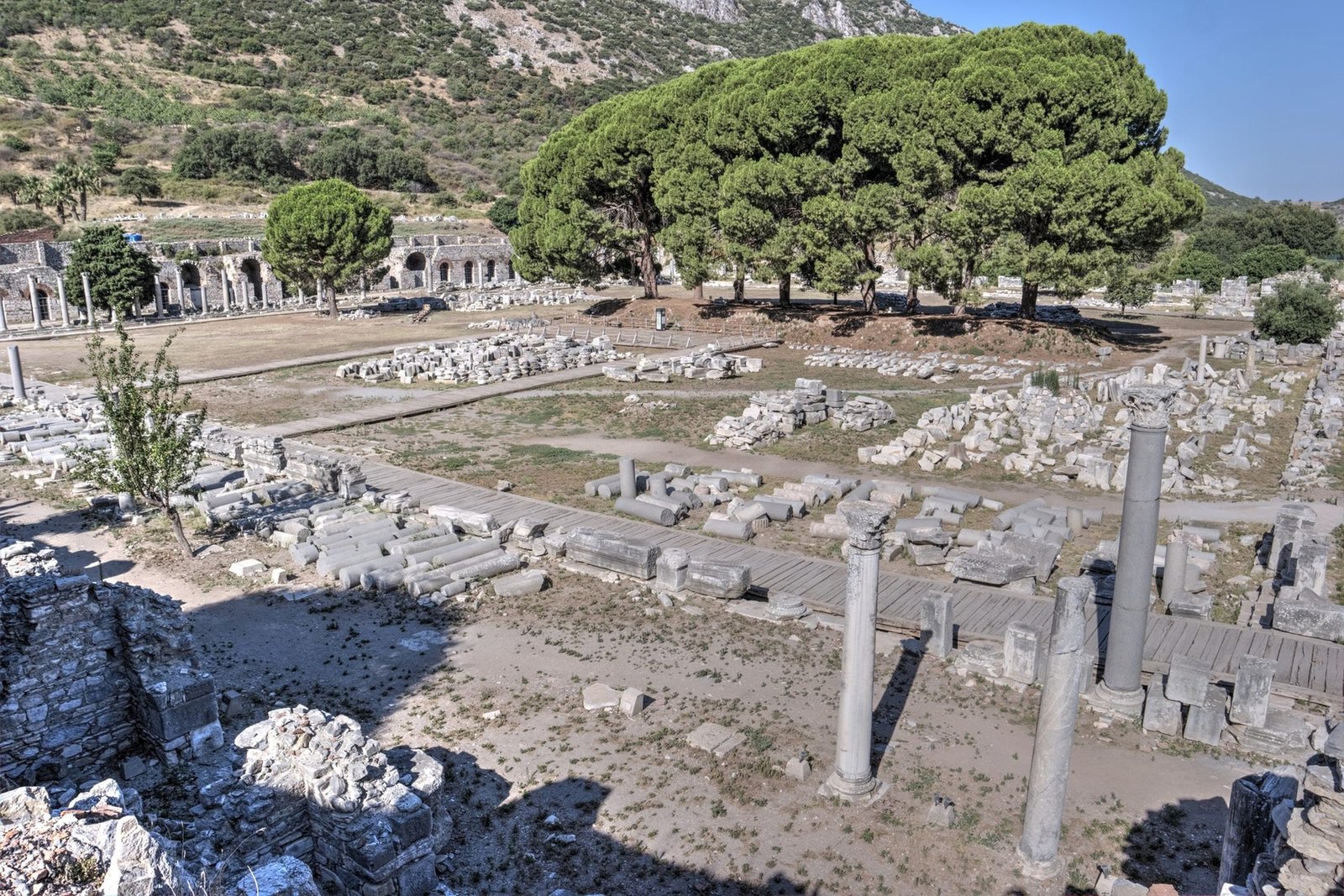
State Agora: The largest and most significant agora in the city, the State Agora is a vast square surrounded by colonnades on three sides. Here, you can explore the remnants of ancient trade.
Lower Agora: Smaller than the State Agora, the Lower Agora primarily served the needs of the local population. You can get a sense of daily life and the atmosphere of an ancient market here.
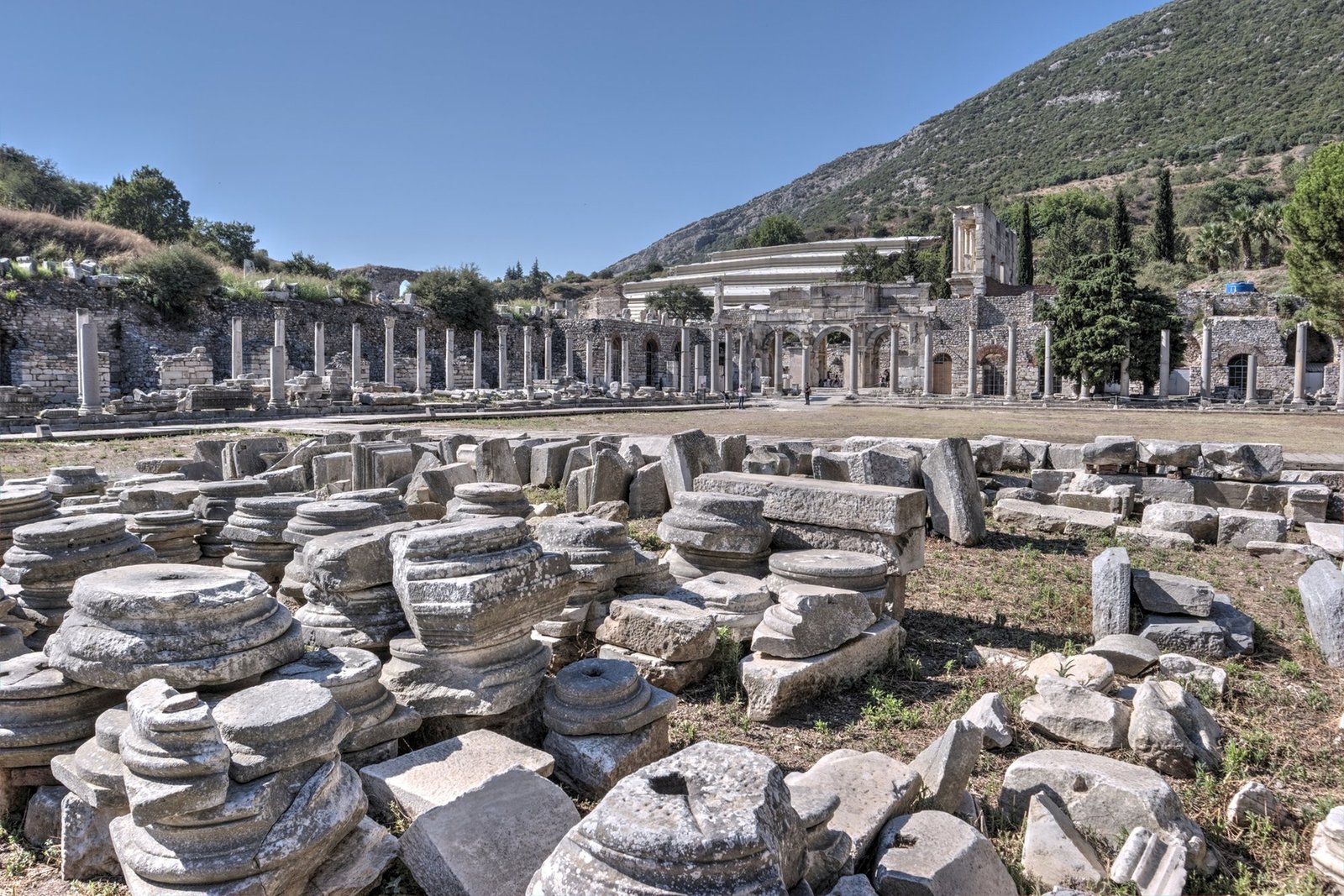
South Gate of the Agora: Located just north of the library, the South Gate of the Agora is a monumental structure with three arches. It served as one of the grand entrances to the agora.
Colonnades: The colonnades surrounding the agora provided shade and enhanced the aesthetic appeal of the structure. Stroll along these colonnades to admire the ancient architecture.

Current State
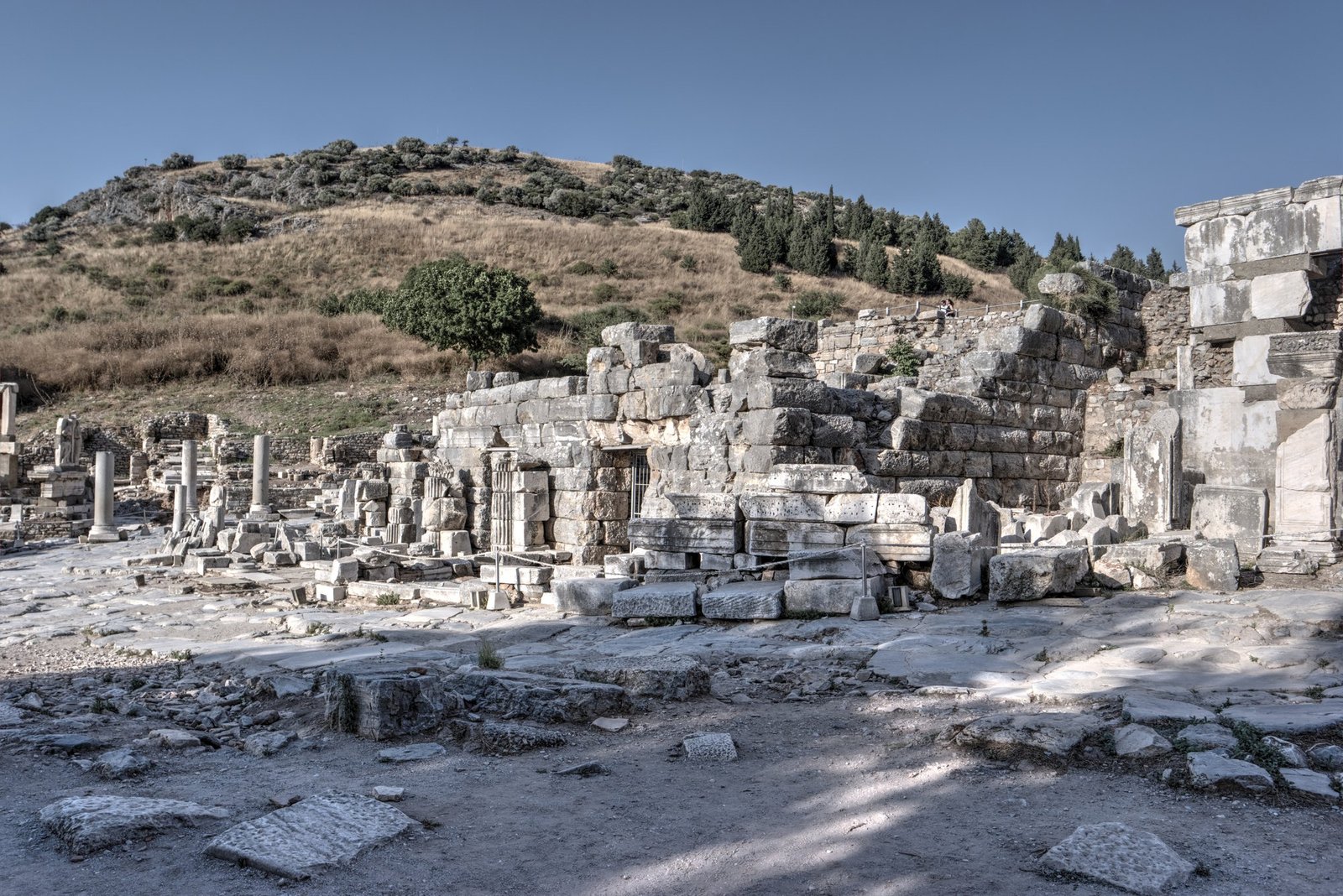
Thanks to ongoing restoration efforts, the Ephesus Agora is well-preserved and continues to be a popular destination for visitors. Both local and international tourists come to explore this ancient marketplace and learn about its history.

Why Visit the Ephesus Agora?
Discover the Heart of Ancient Ephesus: Step into the heart of ancient commerce and experience the city’s lively past.
Trace the Footprints of History: The artifacts unearthed at the Agora offer valuable insights into ancient life.
Witness the Intersection of Cultures: The Agora was a melting pot of cultures. Learn about the interactions between different civilizations.
Take Photos: The Agora’s historical structures and colonnades provide a picturesque backdrop for photography.
Gain a Deeper Understanding of Ephesus: Visiting the Agora is essential for fully appreciating the significance of the ancient city.

Conclusion
The Ephesus Agora is more than just an archaeological site; it shows how lively and dynamic the ancient world was. A visit to this historic marketplace lets you step back in time and see the heart of a once-great civilization.

Visiting The Ephesus Agora: practical information

Both agoras sit inside the main fenced archaeological zone of Ephesus in the Selcuk district of Izmir province. Travelers arriving at Izmir Adnan Menderes Airport can take the regional train or IZBAN commuter line south to Selcuk station, then catch a short taxi or minibus ride to the site entrances. If you enter through the Upper Gate (Magnesia Gate), the State Agora is the very first open plaza on your route, while the Commercial Agora lies near the bottom of the hill between the library and the Lower Gate.

Plan about 30 to 45 minutes to inspect both squares during your walk through the city. Spring and autumn bring comfortable walking temperatures, and arriving when the gates open at 08:00 lets you photograph the colonnades before midday heat and large tour groups arrive. Access to the Ephesus Agora is included in the standard archaeological site admission, and the 15-day Museum Pass Turkiye is accepted at the turnstiles. Check the official site before you go for current hours and prices. Both plazas are open to visitors, though low ropes mark active excavation and stone conservation zones along the side porticoes.

History and what to see

Ancient Ephesus had two separate agoras at opposite ends of the marble thoroughfare, built for distinct civic and economic roles. As you walk downhill from the upper entrance toward the harbor plain, look for these specific ruins:

  • State Agora (Upper Agora): Laid out in the 1st century BC across an area of roughly 160 by 73 meters, this upper plaza hosted political assemblies and civic ceremonies rather than daily food stalls. In the center sit the foundations of a temple dedicated to Isis and the imperial cult.
  • Basilica Stoa: Framing the northern edge of the State Agora, this three-aisled roofed hall was dedicated under Emperor Augustus and his wife Livia to house law courts and administrative offices.
  • Commercial Agora (Tetragonos Agora): Spanning roughly 110 by 110 meters near the ancient harbor, this square marketplace was expanded under Augustus and Emperor Nero (54 to 68 AD) with two-story galleries for over a hundred shops and artisan workshops, where historical accounts also place St. Paul working as a tentmaker.
  • Gate of Mazaeus and Mithridates: Built around 4 to 3 BC beside The Celsus Library, this triple-arched marble gate was funded by two freed imperial slaves and carries Latin and Greek inscriptions honoring Augustus, Livia, Marcus Agrippa, and Julia the Elder.
  • Horologion Foundations: Stone bases at the center of the Commercial Agora where a water and sun clock once regulated market hours.

Nearby places to combine

Because the upper and lower agoras anchor the main walking spine of the ancient city, pairing them with neighboring monuments requires no extra transit between stops.

  • The Celsus Library: Standing immediately outside the southern exit of the Commercial Agora, the library forecourt connects directly to the marketplace through the three arches of the Gate of Mazaeus and Mithridates.
  • The Great Theatre of Ephesus: Follow the wheel-rutted Marble Road along the eastern perimeter of the Commercial Agora to reach this 25,000-seat hillside theater overlooking the ancient harbor avenue.
  • Ephesus Museum: Located in Selcuk town center a short drive from the ruins, this museum houses the terracotta oil lamps, coins, medical instruments, and marble statues excavated from the agoras and residential quarters.
  • The Temple of Artemis: Situated between the Lower Gate and Selcuk town, the foundation site of the ancient sanctuary makes an easy stop on your way back from the archaeological park.

Comparing the Ephesus Agora with nearby Selcuk landmarks

PlaceTypeTime neededBest forEntry
The Ephesus AgoraAncient civic and market plazas30 to 45 minsRoman trade history and inscriptionsTicket
The Celsus LibraryRoman monumental library facade20 to 30 minsArchitecture and photographyTicket
The Great Theatre of EphesusAncient Greco-Roman theater30 minsPanoramic views of the harbor streetTicket
Ephesus MuseumArchaeological museum1 hourOriginal statues, coins, and daily artifactsTicket
The Temple of ArtemisAncient sanctuary ruins20 minsSeven Wonders historyFree

Frequently asked questions

Is the Ephesus Agora worth visiting?

Yes, because seeing both the State Agora and the Commercial Agora shows how a Roman provincial capital separated government administration from maritime trade. The triple-arched Gate of Mazaeus and Mithridates at the edge of the Commercial Agora is one of the best-preserved Augustan monuments in the city.

How long does it take to see the Ephesus Agora?

Most visitors spend 15 minutes at the upper State Agora and 20 to 30 minutes walking along the Commercial Agora and its monumental south gate. This fits naturally into a 2 to 3 hour walk through the wider Ephesus archaeological site.

Do I need a separate ticket for the Ephesus Agora?

No, both the State Agora and the Commercial Agora are included in the standard Ephesus archaeological site admission ticket. International travelers can also enter using the Museum Pass Turkiye or the Museum Pass The Aegean.

Which entrance is closest to the Ephesus Agora?

The Upper Gate (Magnesia Gate) opens directly next to the State Agora, while the Lower Gate is closer to the Commercial Agora and the Great Theatre. Starting at the Upper Gate lets you walk downhill from the State Agora to the Commercial Agora.

Can you walk inside the Commercial Agora today?

Visitors walk along the elevated marble avenues and viewing paths bordering the Commercial Agora and pass directly through the Gate of Mazaeus and Mithridates. The grassy central courtyard itself is often roped off to protect ongoing archaeological work and exposed foundations.

What is the best time of day to visit the agoras?

Early morning right after the 08:00 opening or late afternoon after 15:30 is best because neither plaza has overhead shade. Early arrival also helps you view the Latin and Greek inscriptions on the South Gate before crowds gather around the adjacent library facade.

Sources: muze.gov.tr, whc.unesco.org, en.wikipedia.org

Last reviewed:

Tours that visit Izmir

The Ephesus Agora.md