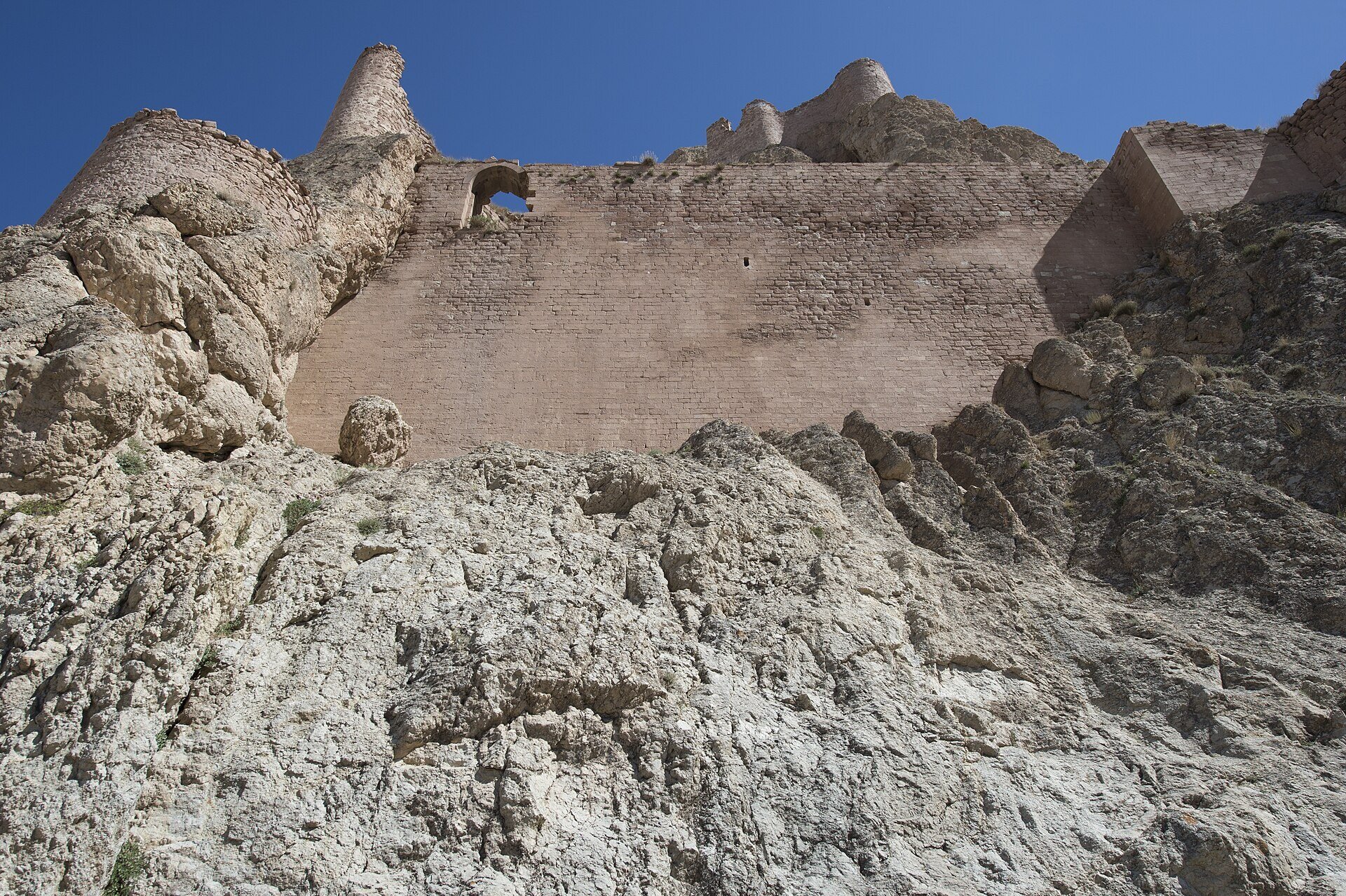
Dogubeyazit Castle perches on the sheer basalt crags of the Belleburç ridge in Eski Bayazıt, about 150 meters across the ravine from Ishak Pasha Palace. Travelers arriving via Ağrı or Iğdır airports first travel to Doğubeyazıt district center, then take a local minibus or taxi up the hill to the palace parking area and walk the rest of the way. Because reaching the lower ramparts and viewpoints involves scrambling over loose stone and steep paths, plan on spending under an hour here depending on how high you climb.
May through October provides dry footing on the rock slopes, whereas winter snow and ice make the cliffside trails hazardous. Early morning and late afternoon bring warm side light across the ravine and the Old Bayazıt Mosque below. The ruins sit in an open, unguarded area with no ticket booth, so admission is free and the Museum Pass Turkiye is not required. Much of the masonry is heavily ruined and lacks safety railings or marked paths; visitors walk the site at their own risk and should check locally on arrival for any rockfall warnings or access restrictions.
Built on an Iron Age foundation overlooking the Silk Road transit corridor between Persia and the Caucasus, the fortress changed hands among Persians, Romans, Byzantines, and the Seljuks, who took the stronghold in 1064. Local tradition traces the name Bayazıt to the Celayirid prince Bayazıt, who rebuilt the defenses in 1374, while Black Sea merchants using the caravan route gave rise to its local nickname, the Genoese Castle (Ceneviz Kalesi). Ottoman forces under Sultan Selim I secured and repaired the garrison during the Çaldıran campaign in 1514.
Because the fortress sits directly above the historical core of Eski Bayazıt, you can link it with neighboring sites on foot before driving out to the wider plain.
| Place | Type | Time needed | Best for | Entry |
|---|---|---|---|---|
| Dogubeyazıt Castle | Multi-period cliff fortress | n/a | Fortification walls, cisterns, and palace views | Free |
| Urartu Castle | Iron Age rock complex | n/a | Urartian rock-cut tombs and temple caves | Free |
| Ishak Pasha Palace | Ottoman palace complex | n/a | Restored courtyards, mosque, and harem | Ticket |
| Ahmet Hani Museum | Cultural and city museum | n/a | Literary dioramas and traditional house | Free |
Yes, even though its outer walls are largely ruined, the dramatic cliffside setting in the Belleburç rocks offers one of the best vantage points over Ishak Pasha Palace and the Old Bayazıt Mosque. Seeing how ancient and medieval builders merged stone towers into vertical rock crags makes it a rewarding stop.
Most visitors spend 30 to 45 minutes walking up the lower approach path, inspecting the surviving wall segments and rock cisterns, and taking photographs across the valley. Those who scramble higher onto the rocky ridge may take a bit longer.
No, the castle ruins stand on open public land with no ticket office or entry fee. The Museum Pass Turkiye is not needed here, though you will need a ticket or pass for nearby Ishak Pasha Palace.
During the medieval period, Genoese merchants traveling from Black Sea ports toward Persia and Central Asia used the Silk Road branch passing beneath these cliffs. Because caravan traders sheltered at and utilized the stronghold along the transit route, the name Genoese Castle entered local usage alongside Bayazıt Castle.
The trail up the rock face is steep, unpaved, and scattered with loose stones, with no guardrails along the cliff edges. Visitors should wear sturdy hiking shoes, avoid climbing in wet or icy weather, and keep young children on the safer lower viewing ground near the mosque.
Take a local minibus or taxi from Doğubeyazıt town center toward Ishak Pasha Palace, which sits about 150 meters from the base of the castle cliffs. From the parking area between the palace and the Old Bayazıt Mosque, you can walk directly to the lower trail.
Sources: agri.ktb.gov.tr, dogubayazit.gov.tr, kulturportali.gov.tr
Last reviewed: