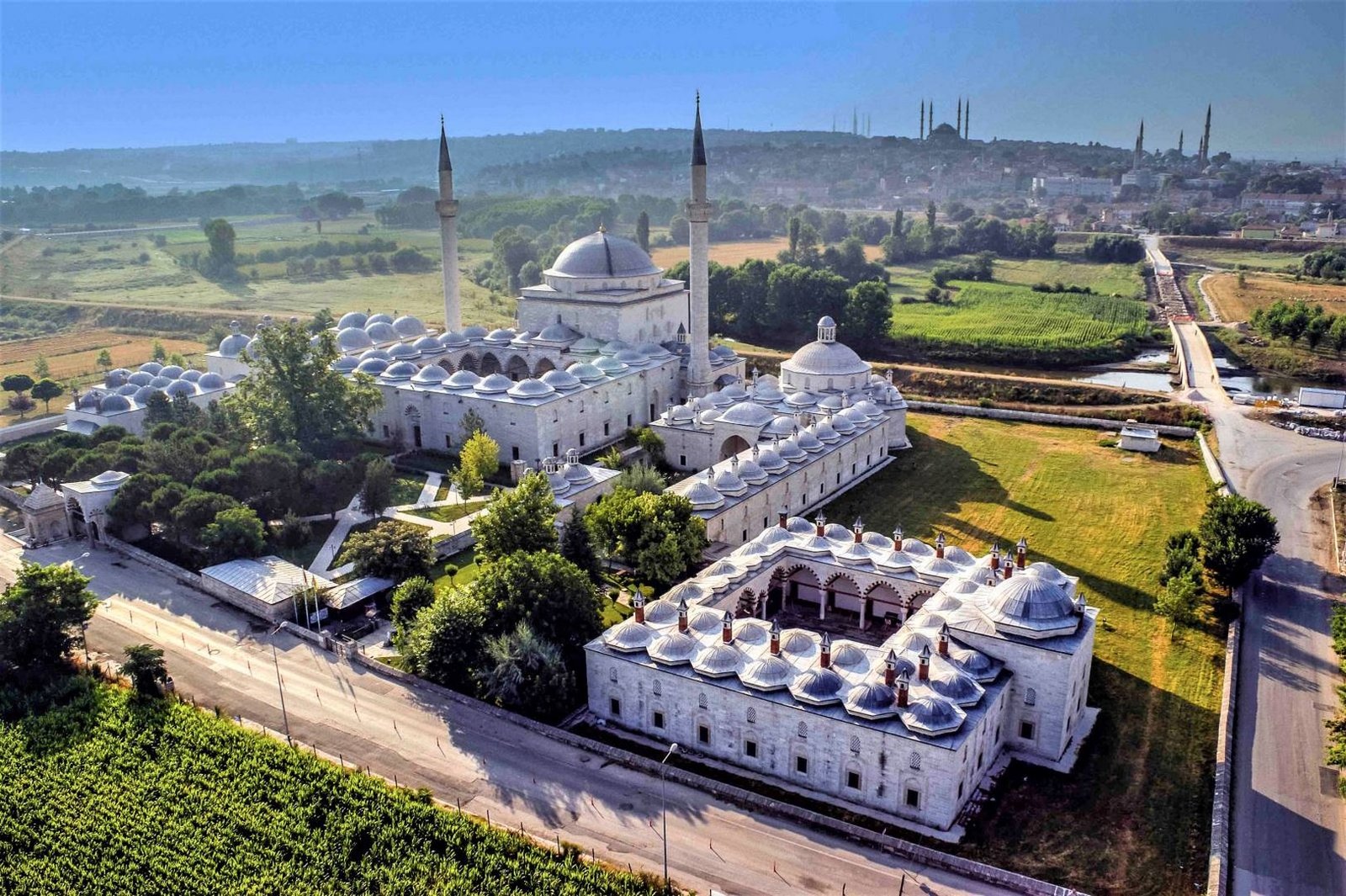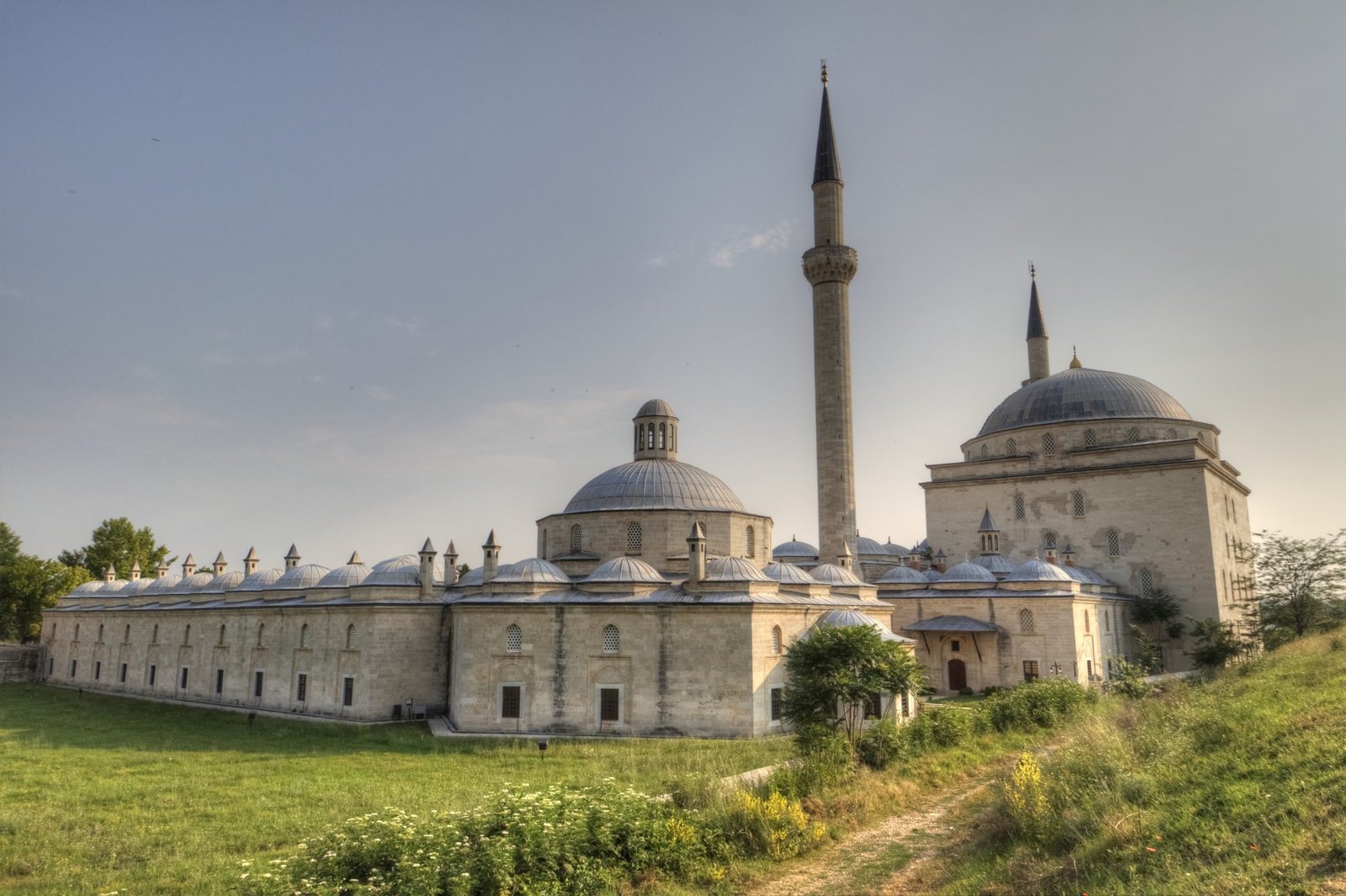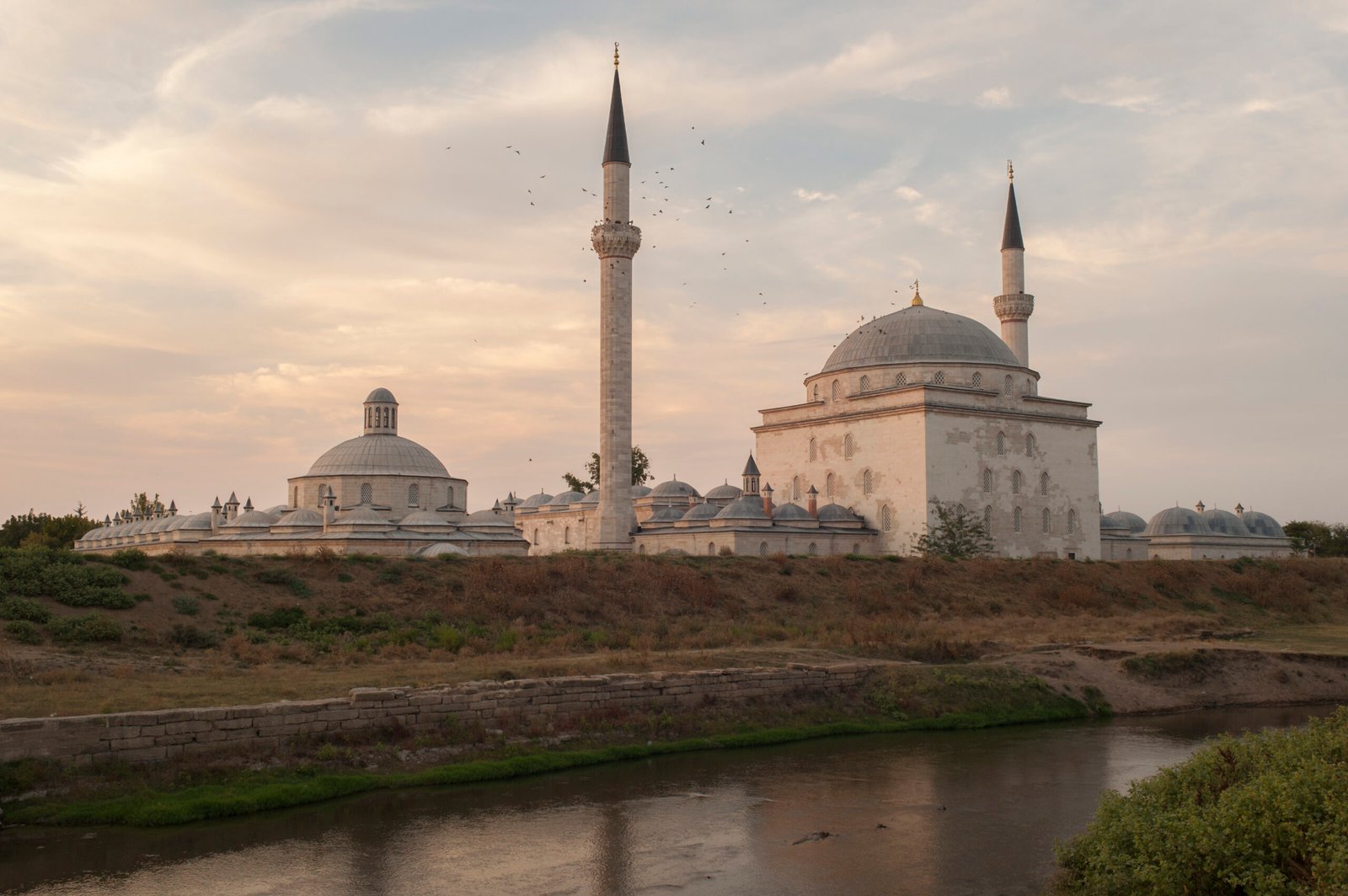
Located in the Yeniimaret neighborhood on the northern bank of the Tunca River, the complex sits a short taxi or local bus ride northwest of central Edirne. Energetic walkers can also reach it on foot from the historic center by crossing the stone Bayezid II Bridge over the river. International travelers usually fly into Istanbul Airport and continue to Edirne by intercity coach or private transfer. Both the active mosque and the Trakya University Sultan Bayezid II Health Museum are open to visitors, though it is wise to verify Monday schedules and holiday closures before setting out.
Set aside enough time to tour the prayer hall, the hospital courtyards, and the medical school rooms at a relaxed pace. Spring and autumn bring mild temperatures that suit the open-air courtyards and riverside paths, and arriving in the morning lets you experience the sound of water and traditional music inside the hospital wards before school tour groups arrive. Entering The Second Bayezid Mosque is free, while the Health Museum inside The Edirne Darussifa charges an admission fee. Because Trakya University operates the museum rather than the Ministry of Culture and Tourism, Museum Pass Turkiye is not valid here. Check the official university website before you go for current hours and prices.
Built between 1484 and 1488 by imperial architect Hayreddin for Sultan Bayezid II, this riverside foundation operated its charity hospital for nearly four centuries until the Russo-Turkish War of 1877 to 1878. Trakya University assumed stewardship of the site in 1984, opening the restored Health Museum on April 23, 1997, adding a Psychiatry History section in 2000, and integrating the medical school courtyard in 2008. The museum won the Council of Europe Museum Prize in 2004 and entered the UNESCO Tentative List in 2016.
Because the complex spans a wide riverside campus and lies close to central Edirne, you can easily pair it with several key sights on the same day:
| Place | Type | Time needed | Best for | Entry |
|---|---|---|---|---|
| The II. Bayezid Complex | Ottoman complex and museum | n/a | 15th-century medical history and riverside architecture | Ticket |
| The Edirne Darussifa | Historic hospital wing | n/a | Ottoman music, water, and scent therapy displays | Ticket |
| The Second Bayezid Mosque | Imperial mosque | n/a | Pillarless single dome and carved marble pulpit | Free |
| The Selimiye Mosque | UNESCO imperial mosque | n/a | Mimar Sinan's 16th-century dome and Iznik tiles | Free |
| The Old Mosque of Edirne | Early Ottoman mosque | n/a | Nine-dome layout and monumental wall calligraphy | Free |
Yes, it is Edirne's second most visited historical landmark after the Selimiye Mosque and won the Council of Europe Museum Prize in 2004. The restored hospital and medical school bring 15th-century Ottoman healthcare to life with music, water fountains, and detailed room displays.
Most visitors spend enough time to walk through the mosque, the two courtyards of the Darussifa hospital, and the eighteen rooms of the medical school. If you enjoy reading the English and Turkish exhibition panels on Ottoman medicine and psychiatry, plan for an unhurried visit.
Entering the mosque and outer grounds is free, while the Health Museum inside the complex requires a separate entry ticket. Museum Pass Turkiye is not accepted because the museum is managed by Trakya University rather than the Ministry of Culture and Tourism. Check the official Trakya University website before you go for current ticket prices and opening hours.
The complex sits on the northern bank of the Tunca River in the Yeniimaret district, a short taxi or local minibus ride from downtown Edirne. You can also walk there from the city center via the historic stone Bayezid II Bridge over the river.
Spring and autumn bring comfortable weather for walking the open courtyards and the Tunca riverbank. Arriving in the morning on a weekday lets you experience the quiet acoustics of the domed hospital hall before larger tour groups arrive.
Children usually enjoy the life-sized mannequin scenes showing medieval medical students, musicians, and pharmacists at work. Most of the courtyard walkways are flat, though historic stone thresholds and doorways between the small madrasa rooms have low steps.
Sources: en.wikipedia.org, en.wikipedia.org, whc.unesco.org
Last reviewed: