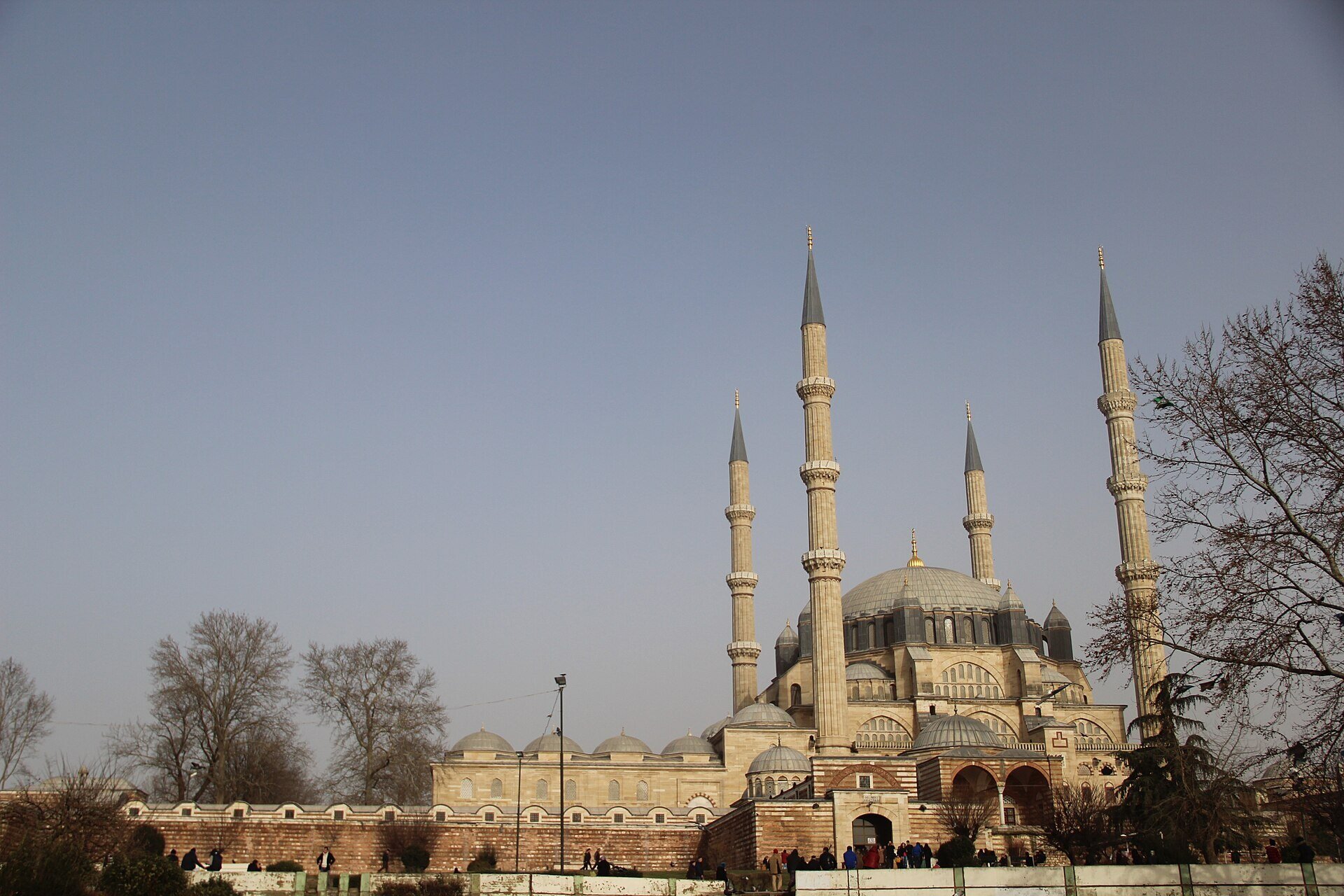
The Selimiye Mosque

The Selimiye Mosque: A Masterpiece of Ottoman Architecture

Introduction

The Selimiye Mosque, located in the city of Edirne, Turkey, is considered one of the greatest achievements of Islamic architecture. Designed by the renowned Ottoman architect Mimar Sinan, this structure shows the height of Ottoman art and engineering.

Construction and History
Construction of the Selimiye Mosque began in 1569 under the patronage of Sultan Selim II and was completed in 1575. Mimar Sinan, who was in his 80s at the time, considered the Selimiye Mosque his masterpiece. The mosque is part of a larger complex that includes a madrasa, a türbe (tomb), a soup kitchen, a bathhouse, and a library.

Significance
The Selimiye Mosque is of great importance in the history of Islamic architecture. Its innovative design and proportions have influenced mosque architecture for centuries. The mosque’s four slender minarets, soaring dome, and spacious interior are unparalleled in Ottoman architecture. The Selimiye Mosque was designated a UNESCO World Heritage Site in 2011.

Key Features
Four Minarets: The mosque’s four minarets, arranged symmetrically around the central dome, are a distinctive feature.
Large Dome: The central dome is one of the largest in the world and is supported by eight massive piers.
Spacious Interior: The interior of the mosque is vast and airy, creating a sense of awe and wonder.
Intricate Decorations: The mosque is adorned with intricate tile work, calligraphy, and geometric patterns.

Visiting the Selimiye Mosque
Visitors to the Selimiye Mosque can explore the main prayer hall, climb the minarets for panoramic views, and visit the associated buildings of the complex. The mosque is an active place of worship, so visitors should dress modestly.

Conclusion
The Selimiye Mosque is a masterpiece of Ottoman architecture that continues to inspire awe and admiration. Its harmonious proportions, elegant design, and spiritual significance make it well worth seeing for anyone visiting Turkey.

Visiting The Selimiye Mosque: practical information

Standing on a central hill that dominates Edirne's skyline, the complex is a short walk from the downtown pedestrian streets and a brief taxi or city bus ride from the Edirne bus terminal. International visitors generally fly into Istanbul Airport and reach Edirne by intercity bus or private car. Following an extensive conservation project that began in late 2021, the mosque reopened for full worship in February 2026 and celebrated its official grand reopening on June 12, 2026, with renewed lead roofing on the domes, reinforced minarets, and conserved interior hand-drawn decorations. Although older descriptions mention climbing the minarets, the minaret staircases are closed to general visitors.

Give yourself ample time to tour the marble courtyard, the main prayer hall, and the surrounding madrasa wings and covered market. Late morning or mid-afternoon outside the five daily prayer windows is ideal, and non-worshippers should avoid the crowded Friday midday service. Spring and autumn bring mild temperatures for walking the hilltop grounds. Admission to the mosque and courtyard is free, and Museum Pass Turkiye is not required for the sanctuary. Check locally before you go for current hours and ticket details for the small museum wings inside the complex.

History and what to see

Commissioned by Sultan Selim II and built between 1569 and 1575 by chief imperial architect Mimar Sinan in his eighties, the complex was inscribed as a UNESCO World Heritage Site in 2011. Sinan unified the interior beneath a single dome measuring about 31.2 meters in diameter, resting on an octagonal system of eight massive piers set close to the outer walls.

  • Main Dome and Window Tiers: Releaded and structurally strengthened during the 2026 restoration, the soaring central dome crowns an open prayer hall illuminated by hundreds of windows fitted with traditional bottle-bottom glass grids.
  • Sultan's Loge and Iznik Tile Panels: The raised imperial gallery on the left side of the mihrab displays 16th-century ceramic tiles from Iznik with floral and calligraphic motifs.
  • Muezzin's Tribune and the Inverted Tulip: Placed directly beneath the center of the dome above a marble fountain, one of the tribune's marble legs bears a carved upside-down tulip associated in local lore with the original landowner.
  • Four Minarets and Arasta Bazaar: Rising roughly 71 meters at the four corners, each slender minaret carries three balconies, while the adjacent Arasta Bazaar lines the complex's lower terrace.

Nearby places to combine

Because the complex crowns the historic center of Edirne, you can easily link your visit with several nearby monuments on foot or by a short ride:

  • The Old Mosque of Edirne sits a few minutes downhill and lets you see how early 15th-century multi-domed Ottoman architecture looked before Sinan's single-dome engineering.
  • Ali Pasa Bazaar runs along the main pedestrian street nearby and was also designed by Mimar Sinan to generate endowment revenue during the 16th century.
  • Edirne Great Synagogue in the neighboring Kaleici district is an easy walk away and showcases the early 20th-century heritage of Edirne's Jewish community.
  • The II. Bayezid Complex and The Edirne Darussifa across the Tunca River make an excellent afternoon pairing if you want to explore a 1488 Ottoman hospital and medical museum.

Comparing The Selimiye Mosque with other Edirne highlights

PlaceTypeTime neededBest forEntry
The Selimiye MosqueUNESCO imperial mosquen/aMimar Sinan's 31.2-meter dome, Iznik tiles, and four minaretsFree
The Old Mosque of EdirneEarly Ottoman mosquen/a1414 nine-dome architecture and wall calligraphyFree
The II. Bayezid ComplexOttoman complex and museumn/a15th-century riverside hospital and medical schoolTicket
Ali Pasa BazaarCovered bazaarn/aSinan-designed vaulted market street and local craftsFree
Edirne Great SynagogueHistoric synagoguen/aRestored early 20th-century synagogue in Kaleicin/a

Frequently asked questions

Is The Selimiye Mosque open to visitors in 2026 after restoration?

Yes, following a comprehensive restoration that began in late 2021, the mosque reopened for full worship in February 2026 and held its official grand reopening ceremony on June 12, 2026. Visitors can once again experience the full prayer hall, courtyard, and conserved dome decorations.

Can visitors climb the minarets of The Selimiye Mosque?

No, although the four minarets are famous for their triple-balcony design and internal spiral staircases, climbing them is not open to the general public. Visitors can admire the roughly 71-meter towers from the marble forecourt and surrounding park.

Is there an entry fee or Museum Pass requirement for The Selimiye Mosque?

Entering the Selimiye Mosque and its courtyard is free for everyone, so Museum Pass Turkiye is not needed for the mosque itself. Separate small museum wings housed in the complex's madrasa buildings have their own schedules and ticketing; check on site for current hours and prices.

What is the inverted tulip inside The Selimiye Mosque?

Carved into one of the marble legs supporting the central muezzin's tribune is a small relief of an upside-down tulip. Local tradition says Mimar Sinan included the tulip to remember the plot's former tulip-garden owner, who initially hesitated to sell the land.

How long should I plan for visiting The Selimiye Mosque?

Plan enough time to walk around the exterior gardens, examine the marble courtyard, sit quietly beneath the 31.2-meter central dome, and browse the adjoining Arasta Bazaar. Visiting between daily prayer times gives you the most relaxed experience.

How do I get to The Selimiye Mosque from Istanbul or Edirne's bus station?

From Istanbul, frequent intercity buses and private transfers run along the highway to Edirne. From the Edirne bus terminal, a short taxi or municipal bus ride brings you straight to the hilltop complex in the city center.

Sources: en.wikipedia.org, whc.unesco.org

Last reviewed:

Tours that visit Edirne

The Selimiye Mosque.md