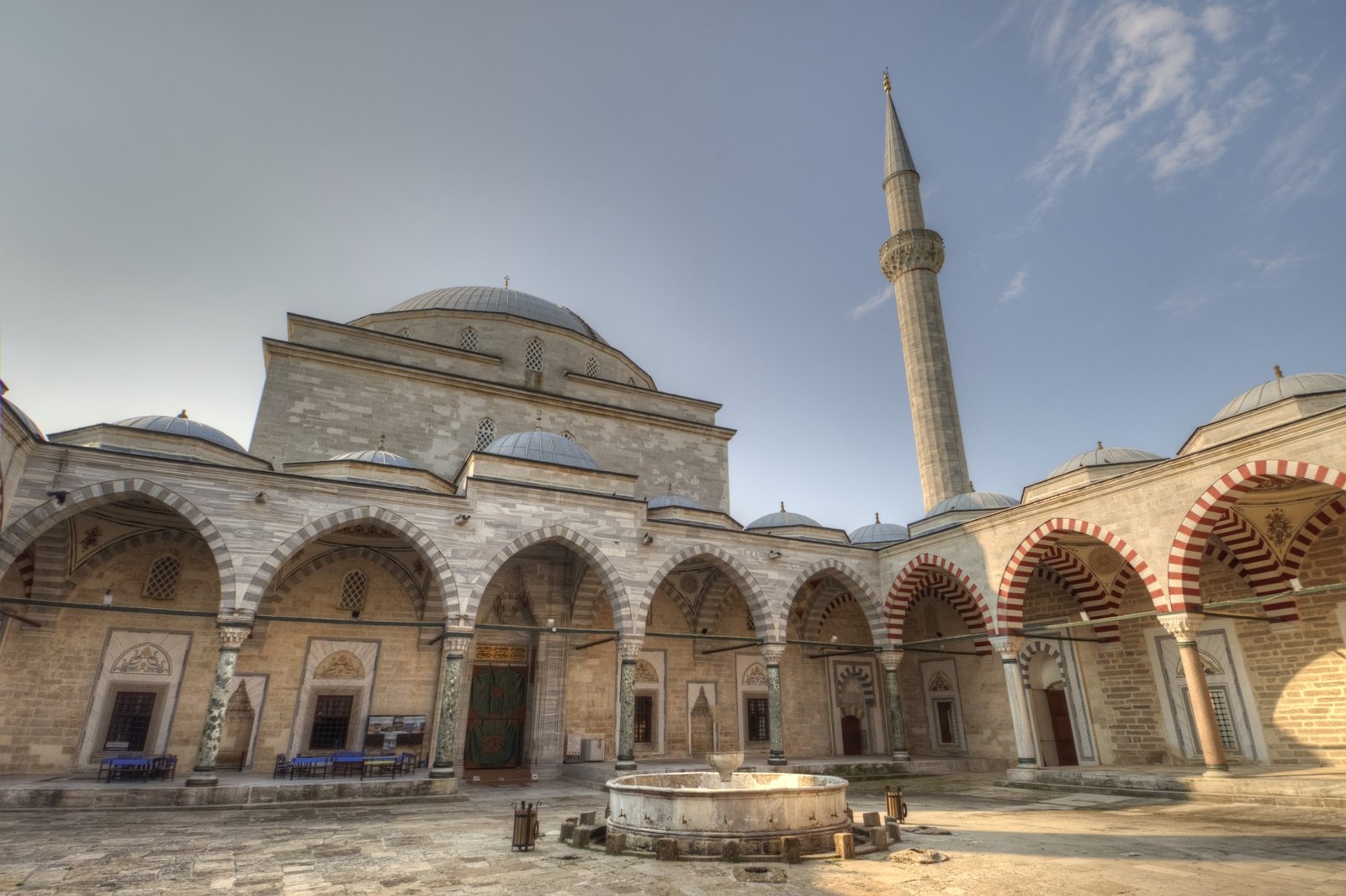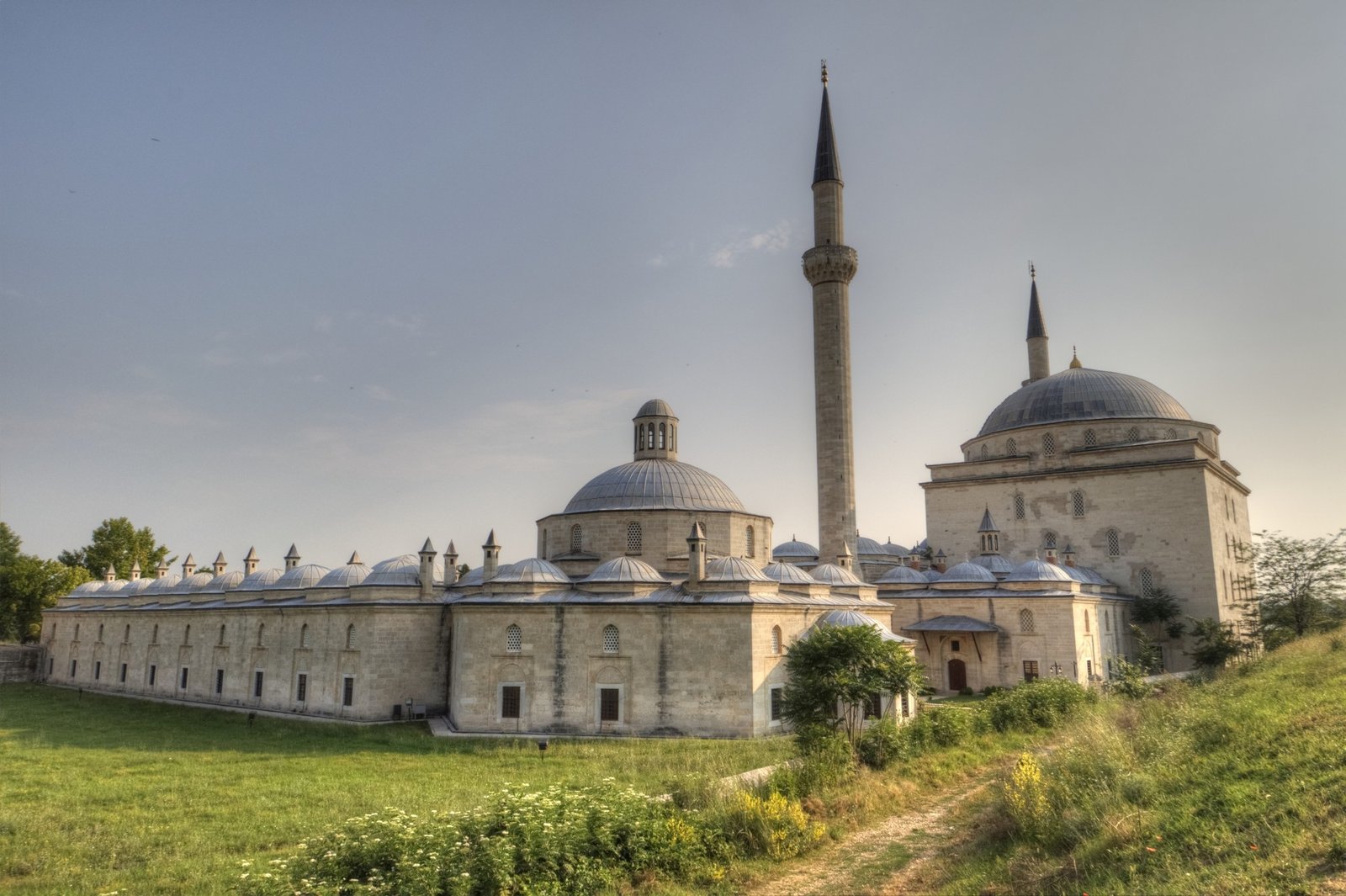
Situated on the northern bank of the Tunca River in the Yeniimaret neighborhood, the Second Bayezid Mosque Edirne can be reached from the city center by municipal minibus, taxi, or a walk across the historic Ottoman stone bridge spanning the river. Because it is an active mosque open for daily prayers, entry to the courtyard and prayer hall is free of charge, and no ticket or Museum Pass Turkiye is needed for the mosque itself.
The sanctuary is open daily outside the five prayer times, though visitors should avoid Friday midday during the main congregational prayer. Modest dress is required (covered shoulders and knees for all visitors, and a headscarf for women), and shoes are removed at the door. The mosque is open and well maintained; check locally in case of temporary restoration work. Allow around 30 to 45 minutes in the morning or late afternoon to explore the courtyard and interior.
Built between 1484 and 1488 by Sultan Bayezid II and designed by the architect Mimar Hayreddin, the mosque anchors a vast riverside foundation that was inscribed on the UNESCO World Heritage Tentative List in 2016. Unlike multi-pier mosques of the earlier 15th century, its design focuses on a single unified interior space flanked by charitable wings.
Because the mosque is the centerpiece of The II. Bayezid Complex, you can walk straight from the marble courtyard into the surrounding 15th-century charitable buildings along the Tunca River. Immediately beside the mosque stands The Edirne Darussifa, the complex's historic hospital and medical school (now operated as a university health museum), making it essential to visit both together on the same trip across the river.
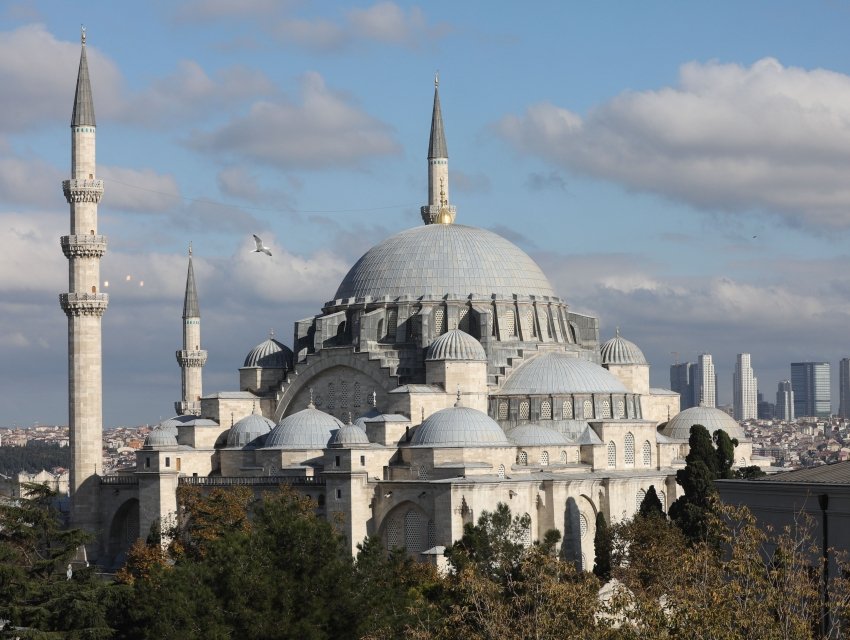
After exploring the riverside complex, return across the bridge to downtown Edirne to trace the evolution of Ottoman mosque architecture: visit The Old Mosque of Edirne to see an early 1400s multi-domed prayer hall, and then walk up to The Selimiye Mosque to see how Mimar Sinan expanded the single-dome concept in the 16th century.
| Place | Type | Time needed | Best for | Entry |
|---|---|---|---|---|
| The Second Bayezid Mosque | 15th-century imperial Ottoman mosque | Short visit | Single-dome sanctuary, first imperial loge, river setting | Free |
| The II. Bayezid Complex | 15th-century Ottoman kulliye | Half day | Charitable complex architecture on the Tunca River | Ticket |
| The Edirne Darussifa | Ottoman hospital and health museum | Short visit | History of medicine, music and water therapy ward | Ticket |
| The Selimiye Mosque | 16th-century imperial mosque | Short visit | Mimar Sinan dome design, Iznik tiles | Free |
Yes, its tranquil setting on the Tunca River and its architectural role as a bridge toward classical single-domed Ottoman mosques make it one of Edirne's standout monuments. Inside, the column-free prayer hall under a 20.55-meter dome and the earliest imperial loge (hunkar mahfili) in Ottoman architecture reward close inspection. Combining the mosque with the adjacent hospital museum creates a complete half-day outing.
No, entering The Second Bayezid Mosque and its colonnaded marble courtyard is completely free of charge. Only the adjacent health museum (The Edirne Darussifa) inside the complex requires a paid ticket. Visitors to the mosque simply observe standard mosque etiquette by dressing modestly and removing shoes before stepping onto the carpets.
Plan 30 to 45 minutes to walk across the historic stone bridge over the Tunca River, admire the porticoed courtyard and sadirvan, and step inside the prayer hall. If you also visit the neighboring Edirne Darussifa and the wider II. Bayezid Complex on the same grounds, set aside about two hours in total. Late afternoon offers warm light on the riverside stonework and twin minarets.
From downtown Edirne around Saraclar Caddesi, you can take a local municipal minibus (ETUS) heading to the Yeniimaret neighborhood or a short taxi ride across the Tunca River. Walkers who enjoy riverside scenery can also reach the complex on foot via the historic stone bridge built as part of Sultan Bayezid II's foundation. Parking is available near the complex entrance.
Designed by Mimar Hayreddin between 1484 and 1488, it covers the entire square prayer hall with a single 20.55-meter dome without internal support pillars, creating a calm, unified interior. It also contains the first imperial loge (hunkar mahfili) in Ottoman mosque architecture, raised on marble columns in the left corner. On the exterior, two symmetrical nine-roomed guesthouse wings (tabhanes) extend the facade to the east and west.
Morning or mid-afternoon between the daily prayer calls is the best time to step inside the prayer hall quietly. Avoid midday on Fridays, when the mosque hosts the weekly congregational prayer and tourist visits pause. Spring and autumn provide the most pleasant weather for walking across the Tunca River bridge and exploring the outer grounds.
Sources: whc.unesco.org, en.wikipedia.org, kulturportali.gov.tr
Last reviewed: